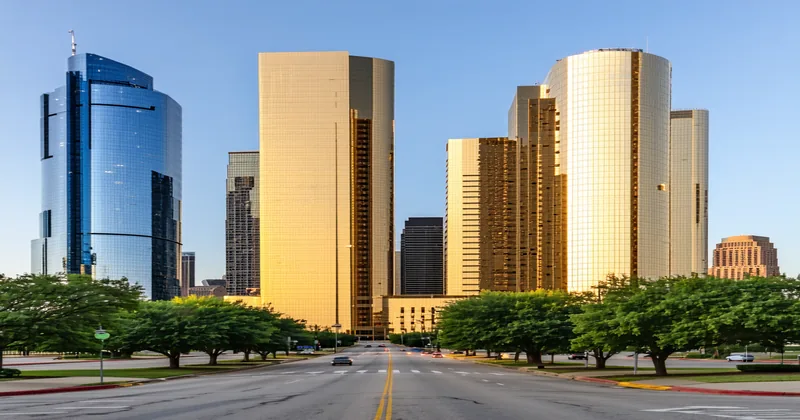
The shift in lease structures that played out across the 2022–2024 office market — particularly in Sun Belt metro markets like Dallas–Fort Worth, Phoenix, and Atlanta — is now visible in the transaction record. What the comp data shows, when analyzed with concession package detail rather than just asking rents, is a market that adjusted primarily through the concession stack rather than through nominal rent reductions. Understanding that adjustment matters for how brokerages are framing deals in 2025.
This piece draws on patterns visible in lease transaction data from 2024 through early 2025 across Sun Belt office and industrial markets. We're describing trends in the comp record — not forecasting where rates go next.
The asking rent versus effective rent divergence in office markets
The clearest signal in the 2024 Sun Belt office lease comp data is the widening spread between asking rent PSF and effective rent PSF. Landlords in major markets — including Uptown Dallas, Austin's central business district, and Atlanta Midtown — have broadly maintained face rents while absorbing tenant negotiating pressure through TI allowances, free rent abatement periods, and, in some cases, moving allowances or landlord-funded spec suite buildouts.
In a Class A Uptown Dallas transaction closing in late 2024 on a 10-year term with full-service gross structure, the effective economics after a $75–90/SF TI package and six months of free rent look materially different from the headline asking rent. The asking rent may be $38/SF. The landlord's actual net operating income at stabilized occupancy, factoring in the TI amortization and the free rent period, is meaningfully lower during the first several years of the lease term.
This pattern — maintaining asking rent while adjusting through concessions — reflects a specific landlord strategy. Face rents are preserved as reference points for future lease renewals and for the comp record that affects the building's valuation. A landlord who drops face rent by $4/SF has that reduction permanently visible in the comp database. A landlord who maintains face rent but provides $90/SF in TI versus the $60/SF they offered two years ago is adjusting economics without creating a comp that hurts future deals.
NNN versus gross: Structure shifts by property type and market
The gross lease versus NNN debate in office markets has historically varied by submarket culture and building ownership type. In the Dallas CBD and Uptown, full-service gross structures have been dominant for Class A multi-tenant office — the tenant pays rent and the landlord absorbs operating expenses and taxes. In suburban North Texas markets — Las Colinas, Frisco, Allen — modified gross and NNN structures appear more frequently, particularly in flex and lower-tier Class B product.
The 2024 transaction record shows an interesting trend in some suburban office submarkets: landlords with higher OpEx pass-through exposure — buildings where HVAC capital expenditures, property tax increases, and common area maintenance costs are significant — have been more willing to negotiate OpEx caps or expense exclusions into their leases to avoid losing tenants who have become more sophisticated about NNN exposure. An annual OpEx escalation cap at $1.00/SF over base year, or a specific exclusion for capital-expenditure items from the pass-through calculation, has appeared more frequently in lease negotiations in the 2024 comp record than in prior years.
For brokers doing NNN comp analysis, this is a material complication. A straight comparison of NNN asking rents PSF across a submarket, without accounting for the specific OpEx pass-through structure and cap provisions, can misrepresent the effective all-in economics by several dollars per square foot over the lease term — particularly in older buildings with higher operating cost profiles.
Free rent abatement: Periods are longer, front-loaded more often
The pattern in free rent abatement across Sun Belt office comp data from 2024 shows both an extension of abatement periods and a shift toward front-loaded rather than back-loaded structures. In prior market cycles, free rent periods were sometimes split — some upfront, some at the end of the lease term — as a way to reduce the landlord's immediate cash flow impact. In the 2024 data, tenants with negotiating leverage have pushed for front-loaded free rent periods, recognizing that time value of money makes front-loaded abatement worth more to them.
In the DFW market, lease transactions from 2024 with terms of 5–7 years showed free rent abatement ranging from 4–8 months on new direct leases, depending on submarket and building quality. For 10-year terms, abatement periods in the 6–10 month range appeared in Class A transactions where the landlord was competitive on TI. These figures come from CompStak-contributed deal data for the DFW market and should be understood as illustrative ranges, not market-wide averages.
Rent escalation structures: Annual bumps and CPI floors
Rent escalation structures in 2024 comp data reflect post-inflation period normalization. After a period in 2022–2023 where tenants pushed back hard on CPI-linked escalations given elevated inflation rates, the 2024 transaction record shows a broad return to fixed annual bumps, typically in the 2.5–3.5% per annum range for Class A office in Sun Belt markets. Some leases in 2024 included CPI caps — providing for CPI-linked escalation subject to a ceiling of 3–4% — as a compromise position that gives landlords some inflation protection without exposing tenants to uncapped CPI escalation.
For brokers benchmarking escalation structures on current requirements, looking at executed comp escalation terms rather than just asking rent is important. Landlords who have already agreed to lower escalation percentages in recent deals are comped by their own transaction record, and knowing those terms provides direct negotiating leverage.
Industrial lease structure: A different dynamic
The industrial market's lease structure trends through 2024 diverge meaningfully from office. NNN is the dominant structure across the DFW industrial submarkets — DFW Airport, South Stemmons, GSW, Mesquite — and tenant improvement packages are structurally lower than in office, reflecting the standardization of industrial product. Free rent abatement has been less common in industrial than in office given the stronger demand fundamentals through most of the 2021–2024 cycle.
The shift visible in 2024 industrial data is on rent escalation and OpEx pass-through for larger distribution facilities. Build-to-suit industrial transactions for major logistics users have included both fixed rent escalation bumps and specific carve-outs for property tax reassessment events — a provision that became more common as several Texas counties reassessed industrial property values upward following the high-transaction-price period. Tenants with negotiating leverage on large-footprint leases have increasingly asked for property tax reassessment caps or landlord-absorbed caps above a threshold basis.
What this means for how brokerages present comps in 2025
The practical implication of these lease structure shifts is that presenting comps by asking rent alone is increasingly misleading — not because asking rent data is wrong, but because the concession stack and structural provisions that determine actual economics have become more complex and more variable across transactions in the same submarket.
We're not saying that every comp package needs to be a full economic model. Most LOI-stage comp work doesn't require that level of detail. What we're saying is that the brokerages who are winning negotiations in the current market are the ones presenting effective rent economics — TI-adjusted, free rent-adjusted, escalation-normalized — rather than raw asking rent comparisons. That analytical depth is what separates a comp package that holds up under counterparty scrutiny from one that gets picked apart in negotiation.
If you'd like to see how Cremdeal's comp engine handles concession-adjusted rent analysis against transactions in your target submarkets, request a demo.